
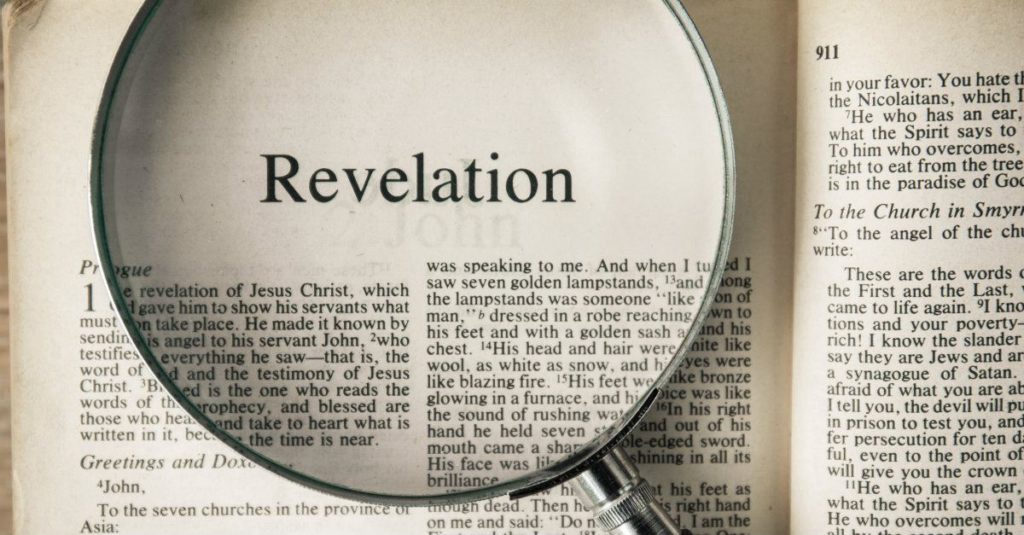
When He opened the fifth seal, I saw under the altar the people slaughtered because of God’s word and the testimony they had. They cried out with a loud voice: “Lord, the One who is holy and true, how long until You judge and avenge our blood from those who live on the earth?” So a white robe was given to each of them, and they were told to rest a little while longer until the number would be completed of their fellow slaves and their brothers, who were going to be killed just as they had been.” (Revelation 6:9-11 HCSB)
Truth is bloody because men would rather kill to maintain their lie than bow to the Truth.
At first glance, this passage feels quite dark and foreboding. After all, it is about God’s wrath and fierce judgment upon rebellious men. However, I would encourage you to keep in mind the idea that though it is describing the LAMB’s devastating wrath, it is all about the faithful and their obedient perseverance. Thus, the slain may be under the altar but they are always on His mind.
We’ve reviewed the opening of the first four seals where we heard the thunderous call from the living creatures for the four horsemen to COME forth. But more than that, I hope you felt their approach like the deep rumbling of thunder as the storm approaches. This storm is unlike any we’ve ever seen. It is intended to get our attention, but for followers of Jesus, not in a negative way. It is intended to alert us to the fact that His return is imminent and we should be alert and ready. (Matt. 25:13; Mk. 13:33; Lk. 21:36; Rom. 13:11; 1 Thess. 5:6-8)
Vengeance is a concept that is misunderstood and often misused. Christians are reminded in Romans 12 to leave vengeance to God and His wrath (see Rom. 12:17-21). The word (vengeance: Greek ekdikeo) comes from the Greek “ek dikos” which means to carry out (ek) justice (dikos). Also, the word “Lord” in this passage is the Greek “despotes” and references the idea that the lord or master of these slaves is the one who must address the injustice of their death or suffering in obedience to His commands. In other words, it is a call for God to do what is right and just concerning this situation. With that in mind, listen to the prayers of these saints: “Lord, the One who is holy and true, how long until You judge and avenge our blood from those who live on the earth?”
As the LAMB opens the fifth seal, John sees those people who have been slaughtered because of their obedience to the Word of God and because of their testimony to its truths. They are under the altar but, up to this point, we’ve not been told anything about an altar in this heavenly scene. In some ways, it is implied by the bowls of incense that have been mentioned (5:8). Regardless, an altar is a place where God meets man and where man worships God. True worship always involves a sacrifice offered up to God on man’s behalf by a worthy priest and, I believe, this altar is no different. But you should notice that these people are UNDER the altar, not on it. I believe that is an extremely important fact.
This isn’t “an” altar but is “the” altar. That tells me that this is not an earthly altar in the Jerusalem Temple or any other earthly worship location but is “THE” heavenly altar in the very presence of God Almighty. All earthly altars are but types, forms, or shadows of that one heavenly altar before God, and this is it. These people are not on the altar as sacrifices but are under the altar. I believe that strongly implies two things: 1) there is a sufficient sacrifice that has been made on that heavenly altar on behalf of those under it; and 2) being under the altar, they are covered by or with that sufficient sacrifice. Both are foundational to our faith! Your death doesn’t pay the debt you owe, and your only hope is to be covered by the Lamb’s sacrifice.
Don’t misunderstand my insistence regarding the location and condition of these slain saints. The word used to describe their condition, slaughtered, is the same word used to describe the Lamb’s condition. Literally, it means their throats have been cut open like a sacrifice. But I believe this is not a literal reference but a figurative reference because many of these martyrs would have died in ways other than having their throats slit. I believe the point is that they died in ways that directly tie or link them intimately in obedience and faithfulness to the Lamb. I would also remind you, the Apostle Paul calls for us to be “living sacrifices, holy and pleasing to God; as an act of spiritual worship (Rom. 12:1).”
Let me be very clear here; when Jesus said that anyone desiring to follow Him “must deny self and take up their cross,” He was NOT talking about social inconveniences, moral sacrifices, or religious asceticism. He was literally talking about being willing to die for His sake and for the sake of the Gospel (see Mk. 8:35; Matt. 10:39; Lk. 9:24). Yes, most definitely die to our selfish desires but also die physically because men would do to us what it did to Him. Today, we tend to think that “denying self” is dealing with uncomfortable conditions during worship— hard pews, poor or non-existent air conditioning, noisy children in worship, worship music we dislike, or a boring sermon. Are we willing to put our lives on the line for the sake of Jesus and His message of redemption?
Next, these who have died in obedience to Jesus and His Word cry out: “Lord… how long until You judge and avenge our blood from those who live on the earth.” I mentioned above that this word “lord” is the Greek “despotes” and means “master” or “lord” and is clearly referencing their position as slaves to “the One who is holy and true.” By the way, you can clearly see where we get our English word “despot,” but the Greek word “despotes” does not carry the negative connotations that the English word “despot” carries. What it does carry is the clear relationship of master/slave or Lord/servant. This is a plea to their Lord to be just in responding to their condition. We have faithfully served and obeyed You; now it is up to You to carry out justice in response to our faithful obedience. They don’t have the right to exact vengeance; that is solely God’s right. We must remember that.
The ones who will be the recipients of the Lamb’s wrathful vengeance are “those who live on the earth.” That might shock you at first. But “those who live on the earth” is intended to be in direct contrast to those who are but “visitors” or “sojourners” here. This is a phrase that will be used throughout Revelation to reference the contrast between residents of the new redeemed earth and the old unredeemed earth or those who are members of God’s kingdom (believers) as opposed to those who are members of man’s kingdom (unbelievers). Fortunately, we aren’t the ones who make that determination; the LAMB does. He alone has been given the right to judge because of His righteousness.
The Lamb’s vengeance will occupy the bulk of the remaining chapters of Revelation. I believe the rest of what we read in this book is the fulfillment of these seven seals of this scroll. If the scroll contains, as I’ve previously stated, the full plan of God’s redemption of mankind, then it only makes sense that the remainder of this book is the fulfillment of these seven seals. I realize that many great and learned scholars have differing opinions on this subject, but my job is not to debate those views here. My job is to relate to you the convictions of my heart discovered at the feet of Jesus, listening to and studying His Word, and through the teaching of His Holy Spirit. I am convinced that these words are written to the seven churches addressed in the first three chapters and, by extension, also to us, as the means of strengthening believers and giving them a firm foundation upon which to stand against the onslaught that will be coming against them from this hostile world. The Revelation is the blessed hope of our faith being realized— from faith to sight.
That brings us to the final words from the breaking of the fifth seal: “A white robe was given to each of them, and they were told to rest a little longer until the number would be completed of their fellow slaves and brothers, who were going to be killed just as they had been.” This white robe is a sign of their purity, righteousness, and innocence before the judge. It is important to note that those under the altar receive a white robe, but those who live on the earth receive the Lamb’s wrath. Our position of purity, righteousness, and innocence before God is not based on our worth or works; it is based on our being under the altar, the place of submission to the master and of being covered by His sufficient sacrifice. There’s no better or safer place for us to be during days of tribulation and struggle. Simply put, there is no other place for a follower of Jesus, period!
While we are called to absolute obedience, I must emphasize that righteousness does not flow out of our obedience. The white robes are not the reward for obedience; they are the result of faith in His obedience, of being under the altar of His sacrifice, and covered by His blood. They’re given a robe of righteousness but told to wait a little longer for God’s judgment. Why? Because there will be more who are martyred and join their ranks, fellow slaves and brothers who would be killed just as they had been.
Well, that could add a bit of anxious anticipation to your life. Couldn’t it? I believe it is intended to do exactly the opposite. The purpose in these seven churches (and us) seeing the unfolding of this scene is not to cause anxiety but firm resolve. The world declared these martyrs to be fools for their faith, their testimony, and their commitment to God’s word, but the Lamb declares them to be righteous and worthy of honor and a white robe. The question you and I face is whether we will be true to God’s word and in giving testimony to our Lord’s sacrifice and resurrection or not?
These martyrs were under the altar, but they were certainly on their Master’s mind. He knew of their costly sacrifice, but He knew their promised reward was infinitely greater. We will either choose to be comfortable today but suffering forever, banned from His presence, or suffering today and comfortably in His presence forever. Which will you choose?
As for me, well… move over, brothers, make room for me under there.
 Hilltop Baptist Church - Shawnee, OK
Leave a comment