
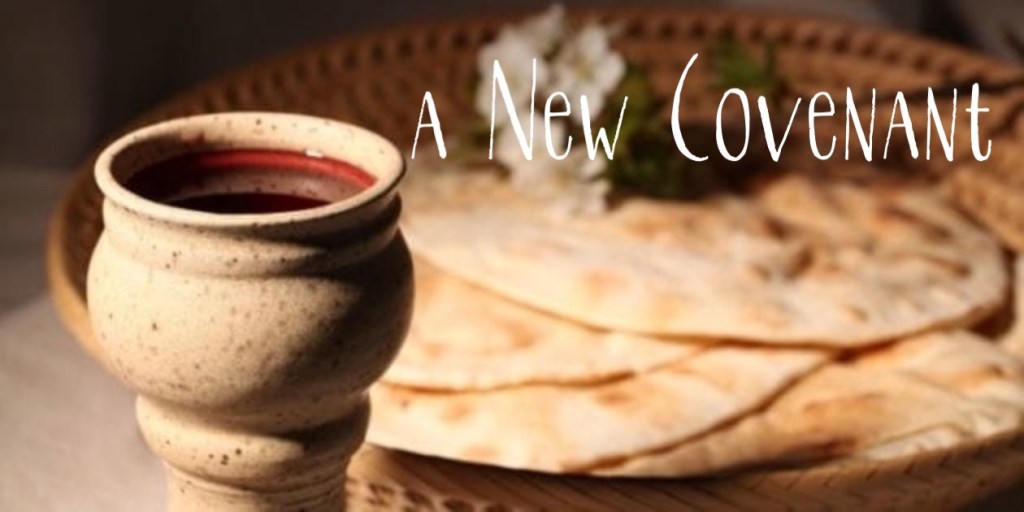
“As they were eating, He took bread, blessed and broke it, gave it to them, and said, “Take it; this is My body.” Then He took a cup, and after giving thanks, He gave it to them, and so they all drank from it. He said to them, “This is My blood that establishes the covenant; it is shed for many. I assure you: I will no longer drink of the fruit of the vine until that day when I drink it in a new way in the kingdom of God.” After singing psalms, they went out to the Mount of Olives.” (Mark 14:22-26 HCSB)
Several years ago, Oklahoma instituted what they would call a “covenant marriage” law. The intent of this law was to address the significant increase in failed marriages that ended up in divorce court. As a part of this new law, the clergy of Oklahoma were asked to sign an agreement that they would counsel couples prior to performing a wedding and that the premarital counseling would teach and encourage the couple on how to address issues and remain in a covenant relationship.
Ok, but what’s the difference between a covenant and an agreement or contract? While covenants often include promises and conditions, the primary biblical covenant between God and Abraham (and its renewal in David) is not conditional. God makes a binding promise to Abraham that is unconditional and is the basis for what we call the Old Testament or Covenant. On the other hand, contracts are generally conditional and if one party breaks any of the conditions then the entire contract becomes null, void and no longer binding. But God’s covenant with His people is binding and unconditional.
So, Oklahoma leadership wanted to encourage couples to consider making a covenant with each other in which they would agree to carry out their own side of a marriage covenant regardless of how the other person carried out their side of the covenant. The idea behind it is that we all go through times of struggle and growth in our relationships and if we recognize that in each other and continue to keep our side of the covenant then the marriage can self-correct, heal, grow and keep a family together and committed to one another.
But like the old saying says, a chain is only as strong as its weakest link. Or is it?
In this week’s focal passage, Jesus gets to the very heart of this issue in the covenant He establishes with us. As you’ll recall, Jesus has already informed His disciples that He is aware that one of them will betray Him. Last week, we considered that issue as we asked the probing question, “Surely, not I?” But when each of the disciples asked Him that question, they were simply informed, “It is one of the Twelve. One who dips his bread with me in the bowl.” As I pointed out, each of them had dipped their bread in that bowl and each of them would betray Him, in some way. You need to keep that in mind as we consider the ramifications of this covenant relationship.
The Passover meal is broken down into segments and is defined by “the cup” and the promises found in Exodus 6:6-8. There are four promises that God makes to Israel in this passage: (1) I will deliver you from Egypt; (2) I will set you free from slavery; (3) I will redeem you by my power and my acts of judgment; (4) I will renew my relationship with you and give you the land I promised. Each of these promises is referenced in the traditions of the Seder meal and is introduced by four cups of wine the participants drink together.
Based on the information we have from Mark and the other gospels; we know that Jesus seems to follow the basic Seder traditions with the first two cups. However, with the third cup He makes a dramatic shift and turns this segment into something new, but not entirely unexpected. As noted above, the third cup introduces the redemption promise through God’s powerful hand and mighty acts of judgment. Specifically, it says: “I will redeem you with an outstretched arm and great acts of judgment.” (See Ex. 6:6) When this section of the meal begins, Jesus takes the unleavened bread, blesses it, breaks it, gives it to the disciples and tells them, “Take it; this is My body.”
The power of God’s outstretched arm and His mighty acts of judgment that will redeem us is the Son of Man, Jesus. The word “body” here (Greek: soma) implies the complete, entire person and not just the physical body. Jesus tells them, “Take it.” Some of the manuscripts of Mark include the word “eat” in that statement. I think that is obviously implied, since He hands them a piece of the bread. Often, some try and read way too much into this statement and the eating of the bread. Some Christian traditions believe the bread literally becomes the body and the wine becomes the blood of Christ. To do so is to miss the symbolism already inherent in the Passover meal and in what Jesus introduces into the lives of the disciples.
Jesus tells the crowd after they ate and were filled, “I am the bread of life.” (See John 6) They wanted to make Him king because He fed them, but He knew that most of them completely misunderstood the purpose and meaning of the meal He provided for them. They only wanted to make Him king because they had been hungry and He miraculously fed them. They wanted more of the same. Keep our bellies full and we will do anything you ask and follow you anywhere. Or so they thought. He knew that wasn’t true because they were only being driven by their appetite and the growl of their bellies. However, He wanted more than that from them and provided more than that for them. HE is the bread of life.
In essence, that is exactly what He’s telling the disciples this night in Mark’s story. Each year, they remembered and celebrated the promises of the Exodus but misunderstood how God would answer and fulfill those promises. They wanted less than God promised and were completely willing to settle for something as short sighted as deliverance from Rome. But God’s promise was much, MUCH bigger than that. The Messiah had not come to deliver them from Rome, but from what really enslaved them… their self-centered desires and rebellion against God.
Isn’t that true of us, too? Don’t we often seek only those things that we think will bring happiness and fulfillment to our lives? Yet, every time we think we’ve found it we discover that it somehow leaves us empty and still longing for that which can satisfy us. We think a raise, promotion, or new job will give us satisfaction and fulfillment. But it doesn’t. We decide that we must have just missed it and so we keep looking for a new job, new responsibilities, new love interest or new distraction. Anything that will calm the fear that builds inside or quiet the storm that rages within.
What if? What if the things we think will bring happiness, satisfaction and fulfillment are incapable of doing so because they are poor substitutes for what we really need, really want? The disciples are being prepared to embrace a truth they have not fully grasped; Jesus is the fulfillment of God’s promises and ALL they will ever need. “Take it; this is My body.” He is the bread of life that can satisfy their deepest hunger, fill their insatiable desires and give them the happiness and satisfaction they so desperately crave. Jesus is all they need, “Take it; this is My body.”
Next, He takes the third cup of the Seder – the one that signifies the promise of God’s redemption, His outstretched arm and the mighty acts of judgment – and He tells them, “This is My blood that establishes the covenant; it is shed for the many.” (See Isaiah 52:13 – 53:12; Jer. 31:31-34) So, Jesus is not only all they need but He will also do all that needs to be done to ensure their redemption. His blood establishes the covenant that ensures God’s redemption. Jesus’ death, the shedding of His blood, will be the fulfillment of God’s promised outstretched arm and mighty acts of judgment.
Just as the blood of the Passover lamb provided Israel protection from God’s outstretched arm and judgment against Egypt, Jesus’ blood provides us with protection from God’s wrath and judgment against sin. The protection they received was not due to their personal achievement or moral goodness. It was due to their obedience in appropriating the blood of the lamb upon their homes and families. The protection we can receive is never due to our personal achievement or moral goodness. It is only based upon our obedience in appropriating the blood of the Lamb of God upon our lives, our homes, our families.
I started out talking about a covenant and I want to go back to that for a moment. The covenant that God established with Abraham and renewed with David was not based upon their ability to obey God’s commands. It was based solely upon God’s character, mercy and forgiveness and their faith in God’s ability to fulfill His promise. The one thing the Old Testament shows us is that God’s people were incapable of keeping God’s commandments, but God was merciful and continued to seek those who would trust Him, believe His promises and walk with Him. Those are the kind of followers He still seeks. In fact, Jesus told a woman at a well in Sychar that “God seeks those who will worship Him like that, in spirit and in truth.” Not those who know all of the answers, but those who are willing to seek those answers in a spirit of truth.
Abraham and David failed to live up to their part of the covenant with God, but God didn’t. God didn’t enter that covenant with them with the expectation that they would be able to live perfect lives and obey His commands completely. He established that covenant with them knowing full well that they would fail to do so, but would continue to seek Him, to love Him and to walk with Him by faith. They sought to live openly and honestly before God even in the midst of their blatant failures to obey Him fully. Let me remind you of how David responded when confronted by his blatant sin:
“Be gracious to me, God, according to Your faithful love; according to Your abundant compassion, blot out my rebellion. Wash away my guilt and cleanse me from my sin. For I am conscious of my rebellion, and my sin is always before me. Against You — You alone — I have sinned and done this evil in Your sight. So You are right when You pass sentence; You are blameless when You judge.” (Psalms 51:1-4 HCSB)
I cited above an old saying about chains and weak links. Let’s just be honest, when it comes to our relationship with God, we are ALWAYS the weak link. Fortunately, God is fully aware of that and has taken that into consideration in His covenant relationship with us. In that covenant relationship, God doesn’t abandon us when we fail but He continues to draw us back into fellowship with Him and to restore us to relationship with Him. That is the story of the Prodigal (Luke 15) and it can be our story, too. The father waits, watching, longing for His lost child to take a step towards home. When he does, God goes out running to welcome him home, to put a robe on him, shoes on his feet and a ring on his hand. And He calls everyone together and celebrates that HIs child has come home.
Sitting around the table in this upper room was a group of young men who each had their own unique struggles in faithfully following Jesus. Yet, Jesus was willing to make a covenant with them. A covenant in His blood. Were they weak links? Oh, yeah. We’ll discuss one of those in detail next week. But His covenant with them was not based on their ability to be perfect. It would not break because of their inherent weakness. No, it would be kept intact due to His indisputable strength. But not just for them, but for the many. The many who are like you, like me, like the Prodigal and the woman at the well: broken, imperfect but wanting to love Him and to know Him intimately in the depths of our spirit and in all truth.
Just for a second, let me take you back to that well in Sychar (John 4). This woman who met Jesus ran back into town, excitedly telling everyone that she had met the Messiah and that He told me “all that I’ve ever done!” Let that sink in a moment. She was SO excited to tell them that she had met the Messiah and He had told her all about her mistakes and failures. She wanted everyone to meet Him and to know Him in this way. Why? Because He knew all she had ever done and, yet He still loved her and wanted her to walk with Him.
The Lamb of God did not come to create a clique of holier than thou religious snobs. He came to create a fellowship of broken people who have discovered that God loves them, despite their brokenness. He wants to establish a covenant relationship with them, not based on their personal goodness or moral values but based on His blood that “is shed for the many.” And here’s the good news: You and I can also be a part of this covenant group. How? By seeking to know Him, love Him and to worship Him in a spirit of truthfulness. Acknowledging our struggles and failures. Being honest with Him, ourselves and each other about our sin. That’s what I’m seeking to do. Are you?
Finally, Jesus assures them that He will not drink of the fruit of the vine until that day when He drinks it in a new way in the kingdom of God. In other words, this breaking of His body and this shedding of His blood will complete God’s third promise of the Exodus and the fourth (fully restored relationship and promised land) will wait to be fulfilled when the kingdom of God comes to completion. He does not end this Passover celebration by drinking the fourth cup that signifies the fourth promise. No, instead He tells them it must wait until that day when they will all celebrate it together and drink it in the new, fulfilled kingdom of God. (See Isaiah 25:6-9)
That means that the fulfillment of God’s promises will not be complete until “the many” are gathered into the His kingdom. Maybe you didn’t catch the importance of that statement. God’s promises are not complete until He has gathered all of those who will come to Him, love Him, trust Him and walk with Him. God’s promises are not complete until you are a part of its fulfillment. In fact, Peter says: “The Lord does not delay His promise, as some understand delay, but is patient with you, not wanting any to perish but all to come to repentance.” (2 Peter 3:9 HCSB)
Then they sang Psalms, the second half of the Hallel: Psalms 115-118. Today, why don’t you go and read them as an appropriate closing to our time together. Here’s the first verse and a link…
“Not to us, Yahweh, not to us, but to Your name give glory because of Your faithful love, because of Your truth.” (Psalms 115:1 HCSB)
 Hilltop Baptist Church - Shawnee, OK
Leave a comment